Skip to content
AsphaltPavingIndex

Asphalt Resurfacing rates in Toronto and the GTA, 2026: what a bid should show

The Paving Company, a Toronto and GTA contractor, publishes $3 to $7 per square foot for an asphalt overlay on an existing surface. Grinding the old surface off first adds $0.75 to $1.25 per square foot, per Sure-Seal Pavement Maintenance. Both are single contractors' own published prices. Lift design is the other lever: the City of Toronto prices HL-1 binder course at $183.60 per tonne against $142.80 for HL-8 surface course.

Last updated: By The Pavement Desk

$3–$7

per square foot (CAD), asphalt overlay on an existing surface, this contractor's own published price

3

named sources behind the table below

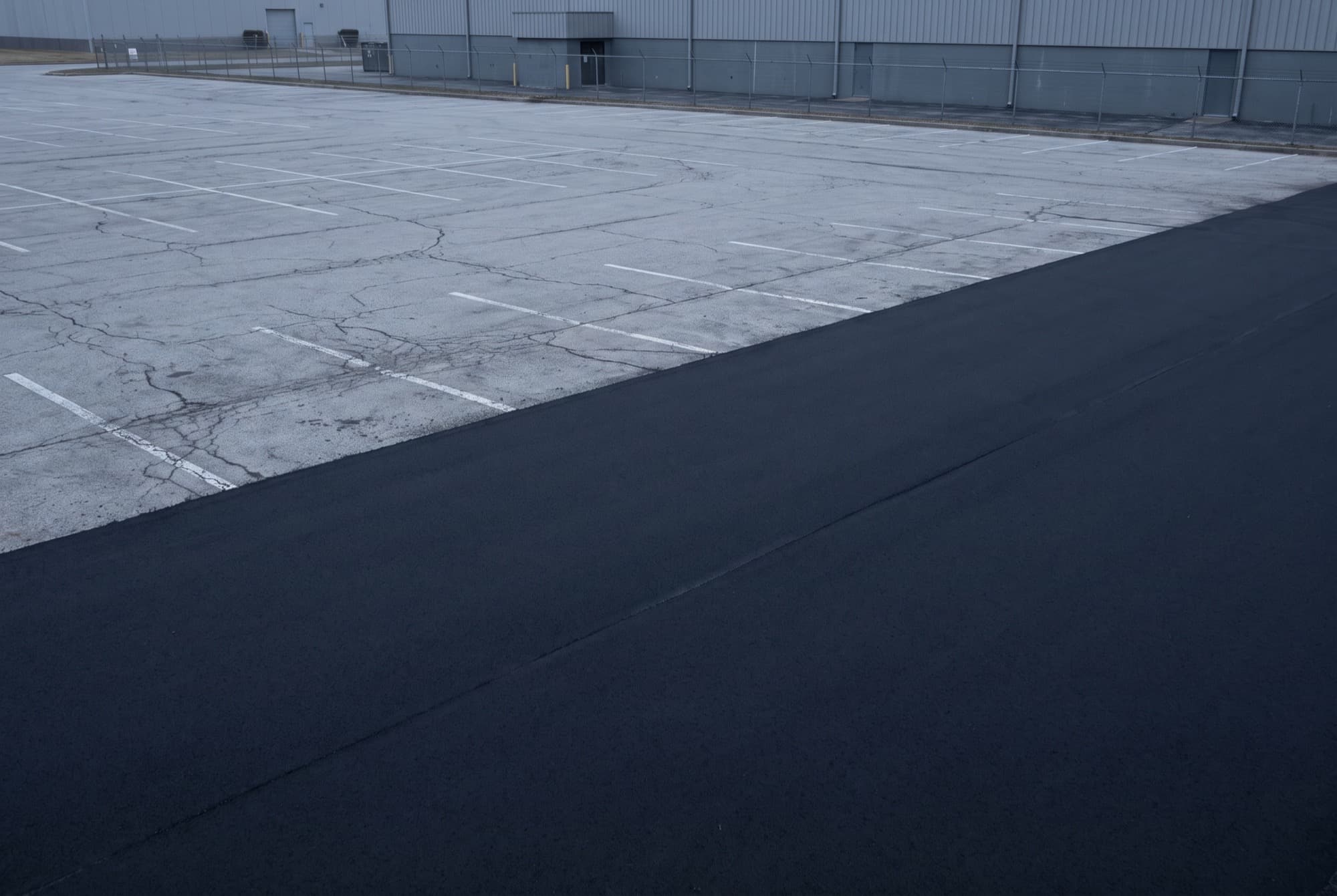
A commercial parking lot part way through resurfacing. The near half is uniformly new black asphalt with no lines on it yet, the far half is the old cracked pale grey surface it replaces, and a straight sharp joint runs between the two.
A generated illustration of the joint between new and old surface, not a photograph of a specific property. It shows what the section drawing above describes and carries none of the numbers on this page.

What does asphalt resurfacing cost, and what does milling add?

The 6 rows below come from 3 named Canadian sources; where they disagreed, the range was widened rather than one picked. A row that shows a single figure is one published price rather than a researched band. A further 4 sources are cited elsewhere on this page. Read the table as a benchmark for checking a bid, not as a price for your site: scope, access, phasing and what is found under the surface all move the number.

The six rows drawn to scale, split by unit. Three of them are City of Toronto material prices per tonne and are single published figures rather than researched bands, so they are marked at a position instead of drawn as a span. Two per-tonne figures sitting far apart on one axis is the binder course costing more than the surface course, which is what makes a two-lift overlay dearer than one thin lift.

per square foot (CAD)
  • Asphalt overlay on an existing surface, this contractor's own published price

    $3–$7

    The Paving Company (Toronto and GTA paving contractor, its own published overlay price)

  • Cold milling, grinding the old asphalt surface ahead of an overlay

    $0.75–$1.25

    Sure-Seal Pavement Maintenance (Toronto and the GTA)

$0$7
per tonne (CAD), material only
  • Asphalt surface course material (HL-8), municipal unit price

    $142.80

    City of Toronto (Broadview Avenue Extension, Municipal Class Environmental Assessment, preliminary cost estimate)

  • Asphalt binder course material (HL-1), municipal unit price

    $183.60

    City of Toronto (Broadview Avenue Extension, Municipal Class Environmental Assessment, preliminary cost estimate)

  • Granular A base material, municipal unit price

    $34.00

    City of Toronto (Broadview Avenue Extension, Municipal Class Environmental Assessment, preliminary cost estimate)

$0$184

All 3 figures here are single published prices rather than researched bands, so each is marked at its position rather than drawn as a span.

per square metre (CAD)
  • Tack coat application between old and new asphalt layers, municipal unit price

    $1.36

    City of Toronto (Broadview Avenue Extension, Municipal Class Environmental Assessment, preliminary cost estimate)

$0$1.36

This is one published figure rather than a researched band, so it is marked at its position rather than drawn as a span.

  • Asphalt overlay on an existing surface, this contractor's own published price

    Price
    $3–$7
    Unit
    per square foot (CAD)
    Applies to
    The contractor gives this as an average for the essential overlay process and says its overlay projects typically range from $1,500 to $50,000 in total. It states the thickness of the new layer depends on the condition of the existing pavement and the intended use, and publishes no minimum job size.
  • Cold milling, grinding the old asphalt surface ahead of an overlay

    Price
    $0.75–$1.25
    Unit
    per square foot (CAD)
    Applies to
    An average the source says varies from one district to another and depends on the size of the parking lot or road, with an estimate given only after a survey of the damage.
  • Asphalt surface course material (HL-8), municipal unit price

    Price
    $142.80
    Unit
    per tonne (CAD), material only
    Source
    City of Toronto (Broadview Avenue Extension, Municipal Class Environmental Assessment, preliminary cost estimate)City of Toronto, Broadview Avenue Extension (North Segment) Municipal Class Environmental Assessment, preliminary cost estimate, published 2023. Line item: HL-8, per tonne.
    Applies to
    A single line item in a preliminary cost estimate for one City of Toronto project. The same estimate adds 25% for minor items, then a 30% contingency and 15% engineering on the sub-total, on top of its itemized unit prices.
  • Asphalt binder course material (HL-1), municipal unit price

    Price
    $183.60
    Unit
    per tonne (CAD), material only
    Source
    City of Toronto (Broadview Avenue Extension, Municipal Class Environmental Assessment, preliminary cost estimate)City of Toronto, Broadview Avenue Extension (North Segment) Municipal Class Environmental Assessment, preliminary cost estimate, published 2023. Line item: HL-1, per tonne.
    Applies to
    A single line item in a preliminary cost estimate for one City of Toronto project. The same estimate adds 25% for minor items, then a 30% contingency and 15% engineering on the sub-total, on top of its itemized unit prices.
  • Granular A base material, municipal unit price

    Price
    $34.00
    Unit
    per tonne (CAD), material only
    Source
    City of Toronto (Broadview Avenue Extension, Municipal Class Environmental Assessment, preliminary cost estimate)City of Toronto, Broadview Avenue Extension (North Segment) Municipal Class Environmental Assessment, preliminary cost estimate, published 2023. Line item: Granular A, per tonne.
    Applies to
    A single line item in a preliminary cost estimate for one City of Toronto project. The same estimate adds 25% for minor items, then a 30% contingency and 15% engineering on the sub-total, on top of its itemized unit prices.
  • Tack coat application between old and new asphalt layers, municipal unit price

    Price
    $1.36
    Unit
    per square metre (CAD)
    Source
    City of Toronto (Broadview Avenue Extension, Municipal Class Environmental Assessment, preliminary cost estimate)City of Toronto, Broadview Avenue Extension (North Segment) Municipal Class Environmental Assessment, preliminary cost estimate, published 2023. Line item: Tack coat, per square metre.
    Applies to
    A single line item in a preliminary cost estimate for one City of Toronto project. The same estimate adds 25% for minor items, then a 30% contingency and 15% engineering on the sub-total, on top of its itemized unit prices.

Overlay or mill and pave: which one is quoted?

Both are called resurfacing and both leave a black lot behind, and the difference between them is a line item most quotes do not spell out. Whether milling is included is the first thing to check: grinding the old surface before an overlay adds $0.75 to $1.25 per square foot on top of the resurfacing price.

Overlay, straight over the old surfaceThe existing asphalt stays. The lot finishes higher than it started.
New surface course, HL-8
Tack coat
Existing asphalt, left in place
Granular base

$3 to $7 per square foot (CAD), asphalt overlay on an existing surface

New surface course, HL-8
New surface course, HL-8. An Ontario surface-course asphalt mix designation. HL-8 is the wearing layer traffic runs on; HL-1 is the binder course underneath it. A quote naming the mix is quoting a specification, not a colour.
Tack coat
Tack coat. A thin bituminous spray applied between the old surface and the new layer so the two bond as one. It is a cheap line item and the usual cause of a new overlay peeling in sheets when it is skipped. The City of Toronto prices it at $1.36 per square metre.
Existing asphalt, left in place
Existing asphalt, left in place. Resurfacing only works over a structurally sound base, and a failed granular base or subgrade pushes the job toward full reconstruction instead of the $3 to $7 per square foot overlay range.
Granular base
Granular base. Granular A base material is priced at $34.00 per tonne in the City of Toronto's own estimates. In this scope it is not opened and not priced.
Mill and paveA measured depth comes off first, so the finished level stays where it was.
New surface course, HL-8
Tack coat
Milled depth, ground off and hauled away
Remaining asphalt and granular base

$0.75 to $1.25 per square foot (CAD) for the milling, on top of the overlay rate

New surface course, HL-8
New surface course, HL-8. The City of Toronto's own material pricing shows the binder course (HL-1) costing more per tonne than the surface course (HL-8), $183.60 versus $142.80, so a two-lift overlay costs more than a single thin lift.
Tack coat
Tack coat. Applied to the milled face rather than to a weathered surface, for the same bonding reason and at the same $1.36 per square metre the City of Toronto publishes.
Milled depth, ground off and hauled away
Milled depth, ground off and hauled away. Grinding a measured depth off the existing surface before the new asphalt goes down, so the finished level still meets the curbs and door thresholds. Priced by area, separately from the paving.
Remaining asphalt and granular base
Remaining asphalt and granular base. AsphaltWorkx notes that regrading and drainage correction are common needs on GTA commercial asphalt projects and add to project scope, and this is the layer that decides whether either is required.

Not to scale. The drawing shows which layers each scope pays for, not how thick any of them is. On the left the lot rises by the depth of the new lift, which is what puts a resurfaced entrance above its own door threshold and a curb below its own reveal; on the right it does not.

What drives the price?

Scope, site access, phasing and what is found under the surface move asphalt resurfacing pricing further than any other factor in the GTA. Two bids on one lot are rarely the same job, so read the list below as the things to check a bidder has priced rather than quietly excluded.

  • Whether milling is included: grinding the old surface before an overlay adds $0.75 to $1.25 per square foot on top of the resurfacing price (Sure-Seal Pavement Maintenance)
  • Asphalt tonnage and lift design: the City of Toronto's own material pricing shows the binder course (HL-1) costing more per tonne than the surface course (HL-8), $183.60 versus $142.80, so a two-lift overlay costs more than a single thin lift (City of Toronto)
  • Base condition: resurfacing only works over a structurally sound base, and a failed granular base or subgrade pushes the job toward full reconstruction instead of the $3 to $7 per square foot overlay range (The Paving Company)
  • Tack coat and bonding preparation between old and new asphalt, priced at $1.36 per square metre in the City of Toronto's own estimates (City of Toronto)
  • Raw material costs, which move with the province's asphalt cement price index, standing at 1569.50 in June 2026 (Ontario Asphalt Pavement Council)
  • Grading and drainage correction ahead of an overlay: AsphaltWorkx notes that regrading and drainage correction are common needs on GTA commercial asphalt projects and add to project scope (AsphaltWorkx)

What's specific to Ontario and Toronto?

Ontario rules and municipal bylaws change the math in ways a national price guide misses, and several of them decide whether a bid is even complete. Here is what applies locally, from HST to permits to licensing.

  • Ontario's HST rate is 13%, confirmed on the province's own HST page. Ask whether a resurfacing quote is HST-included or HST-extra before comparing bids.
  • The City of Toronto requires any business that repaves residential or commercial driveways and lots, which includes resurfacing and overlay work, to hold a Driveway Paving Contractor licence. The licence requires identification, a criminal record check, business registration, and a minimum $2,000,000 in commercial liability insurance, and costs $495.12 to apply plus $293.14 per year to renew.

How can I pay less?

You can bring asphalt resurfacing costs down without cutting the parts that decide how long the work lasts. These are the levers that hold up on a commercial site, each tied to a real number in the table above.

  • Ask whether milling is included in your resurfacing quote. Confirming this upfront avoids paying $0.75 to $1.25 per square foot twice, once assumed in a bundled price and again as a surprise add-on (Sure-Seal Pavement Maintenance).
  • Confirm the asphalt mix design and lift count in writing. The City of Toronto's own material pricing shows HL-1 binder course running $183.60 per tonne against $142.80 for HL-8 surface course, so a two-lift design costs more than a thin single lift, and you should know which one you are buying.
  • Time the work for the shoulder season where your operations allow it. Ontario's asphalt cement price index moves with oil markets, and contractor demand, and pricing, tends to peak in summer.
  • Get a written scope that states resurfacing over a sound base versus full reconstruction, since the $3 to $7 per square foot overlay range assumes the existing base does not need rebuilding (The Paving Company).
  • Bundle catch basin adjustments and grading fixes into the same mobilization as the resurfacing crew rather than calling a second contractor back later.

How did we research these numbers?

Every figure on this page comes from a named Canadian source, and where sources disagreed the range was widened rather than one picked. Where public commercial pricing for a scope is genuinely thin, that is said plainly rather than papered over with an estimate. Here is how the numbers were reconciled.

  • Resurfacing, also called an overlay, means adding a new layer of asphalt over an existing base rather than rebuilding a parking lot from the ground up. The Paving Company, a Toronto contractor serving the GTA, publishes $3 to $7 per square foot for its own overlay work. That is one contractor's price list, not a market survey, and it does not separate commercial from residential jobs, so use it to sanity-check a bid rather than to settle one.
  • Before an overlay goes down, the old surface is often milled, or ground off, to keep the new layer level with curbs and catch basins. Sure-Seal Pavement Maintenance, a Toronto and GTA pavement contractor established in 1993, prices cold milling at $0.75 to $1.25 per square foot, a cost that sits on top of the overlay price itself.
  • Raw asphalt is priced by the tonne, not the square foot, once you get past a contractor's blended rate. The City of Toronto's own construction cost estimate for the Broadview Avenue Extension prices the asphalt surface course (HL-8) at $142.80 per tonne and the binder course (HL-1) at $183.60 per tonne, with Granular A base material at $34.00 per tonne and tack coat at $1.36 per square metre. These are road-construction figures from a municipal class environmental assessment, not a private parking lot tender, but they show what the raw materials inside any resurfacing quote actually cost.
  • Resurfacing only works on a lot with a sound underlying base. If the granular base has failed or standing water has undermined the subgrade, a contractor should recommend full-depth reconstruction instead of an overlay, which is priced and scoped differently.
  • Ontario's asphalt cement price index, tracked by the Ontario Asphalt Pavement Council (formerly OHMPA), stood at 1569.50 in June 2026. Because asphalt cement is the binder in every tonne of hot mix, its price moves with oil markets and can shift a resurfacing quote between the estimate stage and the scheduled work date.
  • Public, commercial-specific resurfacing price data for Toronto parking lots is thin online. Only one per-square-foot overlay rate in this guide comes from a named GTA contractor's own price page; the rest of the figures are municipal material unit prices from a City of Toronto cost estimate. Cost-aggregator pages publish wider ranges, but none of the ones checked name an author or a method, so this site does not carry them. Confirm scope, milling included or not and tonnage specified or not, in writing.

Sources

Who bids this work in the GTA?

AsphaltPavingIndex tracks 181 asphalt paving contractors across the Greater Toronto Area, rated 4.27★ on average. The three below sit highest on the published score across those 181 firms, August 2026. Call any of them, or open a profile and add it to the bid list.

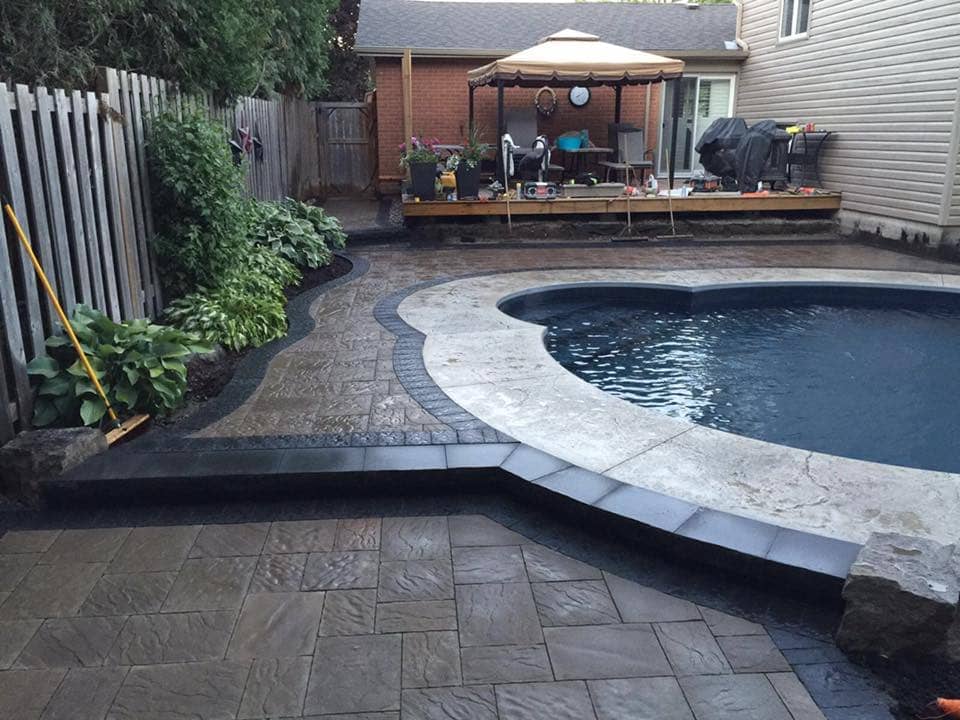
What a resurfaced surface looks like when the crew has gone, photographed by the asphalt paving firms this site ranks highest and published on their own profiles. A finished overlay and a finished mill-and-pave look identical from a standing height, which is exactly why the drawing above matters more than the picture and why the picture is here rather than at the top of the page.
See all 181 ranked asphalt paving contractors

What do the terms in a bid mean?

Three words decide most of what a asphalt resurfacing bid is actually offering, and a quote uses them without explaining them. Here is what each one means on the line items priced above.

Cold milling
Grinding a measured depth off the existing surface before the new asphalt goes down, so the finished level still meets the curbs and door thresholds. Priced by area, separately from the paving.
Tack coat
A thin bituminous spray applied between the old surface and the new layer so the two bond as one. It is a cheap line item and the usual cause of a new overlay peeling in sheets when it is skipped.
HL-8
An Ontario surface-course asphalt mix designation. HL-8 is the wearing layer traffic runs on; HL-1 is the binder course underneath it. A quote naming the mix is quoting a specification, not a colour.

Where should I look next?

Most lots need more than one of these at a time, and the cheapest mistake to avoid is pricing this work without seeing what it sits next to. These are the guides, comparisons and calculators on this site that carry on from here.

Frequently asked questions

How much does asphalt resurfacing cost in Toronto?

The Paving Company, a Toronto and GTA contractor, publishes $3 to $7 per square foot for its overlay work on an existing surface. That figure does not include milling; if the old surface needs to be ground down first, add $0.75 to $1.25 per square foot for that step (Sure-Seal Pavement Maintenance). Both are single contractors' published prices, so price your own job against at least three written bids.

What is cold milling and does my resurfacing job need it?

Cold milling grinds off the top layer of old asphalt so the new overlay sits flush with curbs, catch basins and door thresholds. Sure-Seal Pavement Maintenance, a Toronto and GTA contractor, prices it at $0.75 to $1.25 per square foot on top of the resurfacing cost.

How much does the actual asphalt material cost per tonne in Ontario?

The City of Toronto's own construction cost estimates price the asphalt surface course (HL-8) at $142.80 per tonne and the binder course (HL-1) at $183.60 per tonne. These are road-construction unit prices, not a parking lot tender, but they show what raw material makes up inside any resurfacing quote.

Can any parking lot be resurfaced, or does it need full reconstruction?

Only a lot with a sound underlying base can be resurfaced within the $3 to $7 per square foot overlay range (The Paving Company). If the granular base has failed or water has undermined the subgrade, a contractor should recommend full reconstruction instead, which is priced differently.

What is a tack coat and why does it add to resurfacing cost?

A tack coat is a thin asphalt emulsion sprayed on the old or milled surface so the new asphalt bonds properly instead of peeling apart in sheets. The City of Toronto's own unit pricing puts it at $1.36 per square metre, a small line item that is easy to overlook when comparing quotes.

Questions to ask your contractor

  • Is this an overlay on the existing surface or a full-depth removal, and why? Compare the two approaches
  • What tack coat, mix type and compaction are specified, and who tests them?
  • How long before the new surface takes traffic, and what protects it meanwhile?
  • What is the unit rate if failed base is found once the surface comes off?
  • Which items are excluded from this price, in writing?