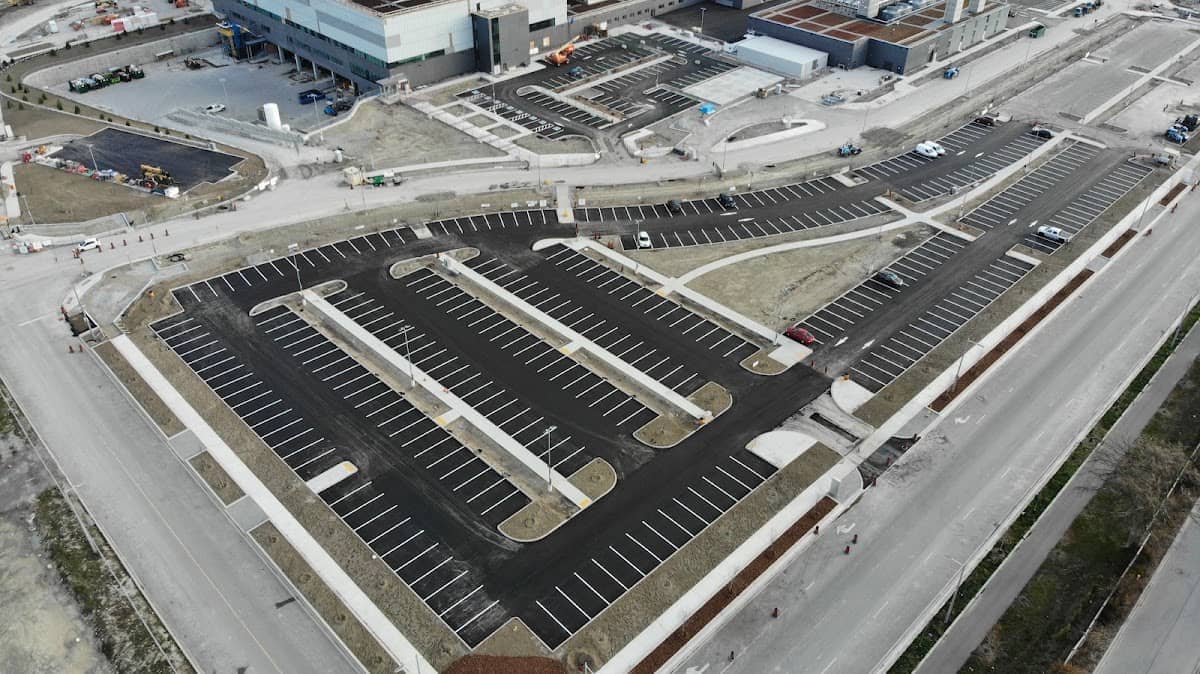
The Parking Lot Guys Inc.
Request a quoteAgincourt, Toronto · 4.6 km out/Sealcoating, Asphalt Repair, Parking Lot Paving
The one paving price on this site where every published Canadian source agrees. Pick whose rate to price against, add the crack filling that has to happen first, and see how much sealer the job actually takes.
Last updated: By The Pavement Desk
per sq ft, and all six sources sit inside it
coats, stated independently by three Canadian sources
Sealcoating, HST included
over 42,000 sq ft at $0.20–$0.40 per sq ft, with 400 linear feet of crack filling. Crack filling happens before the sealer, never after.
Rate from Zusashi Maintenance (Asphalt Sealing, Mississauga and the GTA, since 2007)
Crack fill rate from Zusashi Maintenance (Asphalt Sealing, Mississauga and the GTA, since 2007)
Coverage from Seal Pro (Canadian asphalt maintenance), which does not say per coat or per job
Two coats is the published standard, and three Canadian sources say so. Three coats mud-cracks.
Almost every other cost on this site comes with a caveat about how widely the published Canadian figures disagree. Sealcoating does not. Six sources, commercial and residential, GTA and elsewhere in Canada, all land between $0.15 and $0.45 per square foot, and most of them inside a much narrower slice of that. If a sealcoating quote is outside that band in either direction, that is worth a question, and it is one of the few places on a paving bill where a number alone tells you something.
One source is internally consistent in a way worth pointing out, because it is a small quality signal. Zusashi Maintenance publishes $0.20 to $0.40 per square foot, and separately publishes a worked example: a 10,000 square foot lot for roughly $2,000 to $4,000. Those are the same numbers. A contractor whose stated rate and stated example agree is a contractor whose rate means something, and this calculator reproduces both.
Two coats is the specification and it is not a preference. Asphalt Pro Inc. explains the mechanism: the first coat soaks into oxidized asphalt and the second, applied perpendicular to the first once it has dried, is the sacrificial wear layer that covers any ridges or missed pores from the first pass. Zusashi Maintenance lists “two-coat application” as its specification and Action Home Services states it applies two coats made by overlap using an oil-based sealer. The same source that argues for two is emphatic that three is a mistake, because over-application mud-cracks. A single coat is only appropriate as a top-up on a surface sealed within the last two to three years.
Crack filling belongs before the sealer and it is priced separately at $1 to $3 per linear foot. The reason is mechanical: a crack keeps opening and closing with temperature, and a thin sealer film bridged across it fails along the crack within a season. Zusashi describes its full restore sequence as pressure wash, crack repair, sealcoat, cure, then fresh line painting, and that order is the order the work has to happen in.
The coverage number on this page has an honest gap in it, and rather than close it by guessing, both readings are shown. Seal Pro states that approximately 400 square feet can be covered by one gallon of sealer, and does not say whether that is per coat or for a finished two-coat job. The two readings differ by a factor of two on the same number. Two Canadian retailer product pages publish their own coverage rates, and both refused the request while this page was researched; a figure that cannot be read cannot be cited, so neither appears here.
Resealing frequency is the softest number on the page. Seal Pro says every 1 to 2 years, Eastern Ontario Paving every 2 to 3, Country Contracting every 2 to 3. All three sell sealcoating, and no neutral published GTA standard turned up. A lot that is still black and still shedding water is not asking for a coat yet, whatever the calendar says.
Row-by-row sealcoating pricing including crack sealing and the full restore sequence is in the Toronto sealcoating cost guide.
Canadian dollars, August 2026. Two of these publish a single figure rather than a band, and they are shown as single figures rather than padded into ranges they never claimed.
AsphaltPavingIndex tracks 96 sealcoating contractors across the Greater Toronto Area. Ask any bidder for two things in writing: the coat count, and whether crack filling is inside the price or beside it. Those two answers explain most of the spread between quotes on an identical lot.
Agincourt, Toronto · 4.6 km out/Sealcoating, Asphalt Repair, Parking Lot Paving
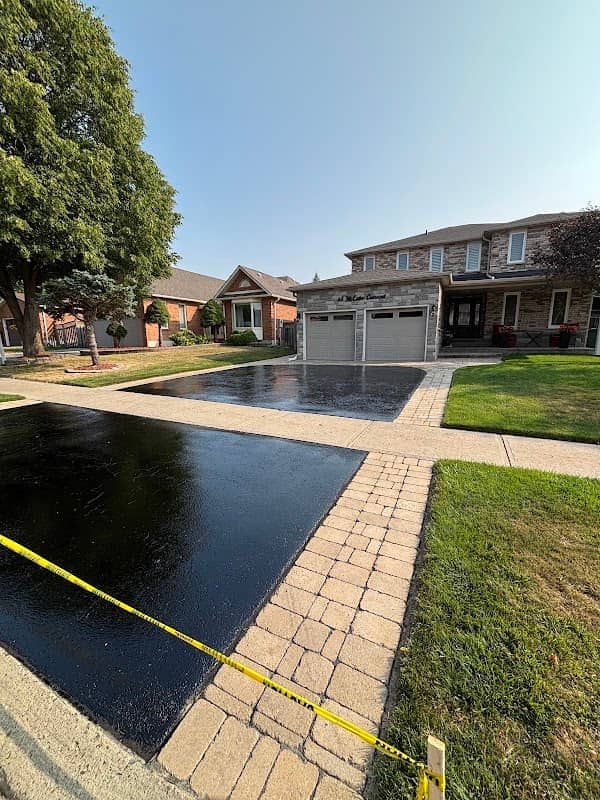
Vaughan · 9.0 km out/Sealcoating, Asphalt Repair, Parking Lot Paving
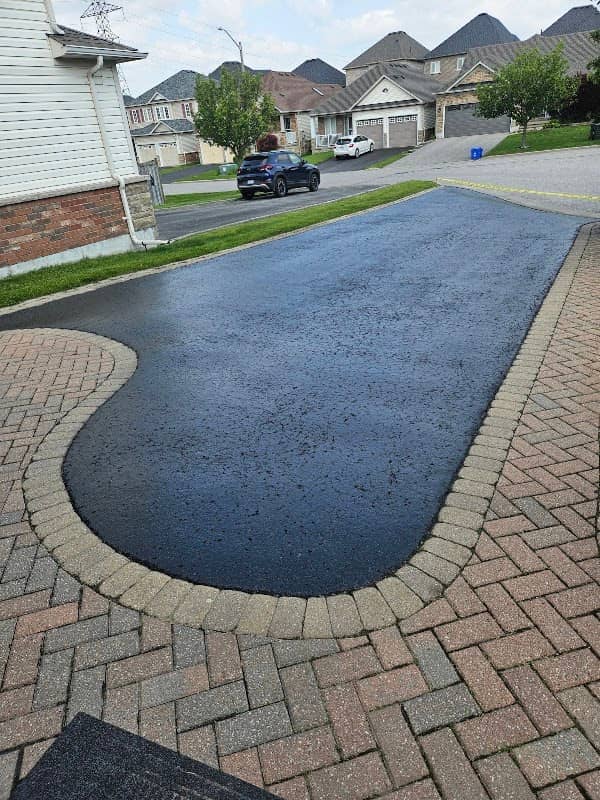
Oshawa · 2.3 km out/Asphalt Repair, Sealcoating, Line Marking